Late summer / early fall
Warm soil, cooler weather ahead and less weed competition favor establishment. Plan early enough for growth before cold weather slows the lawn down.

New-home lawns, uneven yards and ground disturbed by construction. We bring grading, soil preparation and the right seed selection together for a lawn that fits your property.
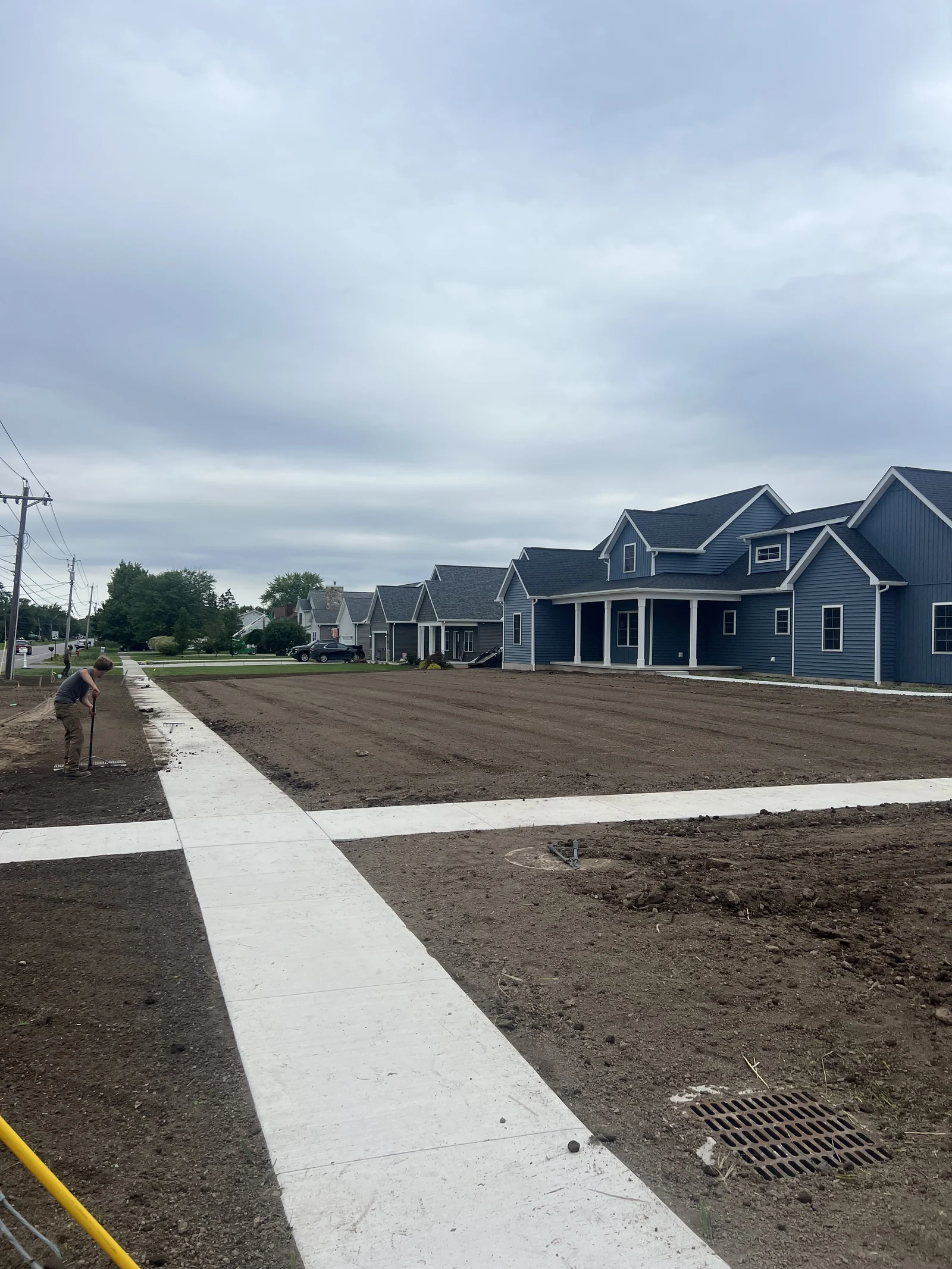
A smooth-looking surface is only part of the job. The soil beneath it, the finished elevations and the way the lawn meets your driveway, walks and beds all influence the result.
We review the area and equipment access, then define the grading, topsoil preparation and seeding in your proposal. Selected repairs and complete lawn installations can be planned around the rest of your landscape work.
Preparation is tailored to the starting conditions and the agreed scope.
Look at existing soil, compaction, sunlight, elevations and access. Discuss how the yard will be used and how it will be watered. Soil testing can guide lime and nutrient decisions.
Address the agreed changes to the grade, remove interfering debris and prepare the soil. Topsoil needs depend on the usable material already on site; adding soil alone does not correct a compacted base.
Create a firm, even surface with loose soil at the top for seed contact. Coordinate final elevations with adjacent surfaces and keep heavy construction ahead of the lawn installation.
Choose the mix and application rate for the site. Identify any seed cover or surface protection in the scope, and establish a watering plan before the seed goes down.
A sunny front lawn, a shaded side yard and an active backyard ask different things of grass. Light, soil, foot traffic and the care you plan to provide guide the choice.
We source our seed through Lakeside in Clarence Center. These are options in their published lineup; we confirm the specific product, current blend and availability when planning your project.
| Seed option | Where it fits | What’s in the mix |
|---|---|---|
| Lakeside Sod Blend | Sunny lawns; matching Lakeside bluegrass sod. | Bluegrass blend, including a Texas hybrid. |
| Barenbrug RTF | Heat, drought and wear considerations. | 80% rhizomatous tall fescue 10% RPR · 10% HGT bluegrass |
| Barenbrug HGT with RPR | Active lawns where wear recovery matters. | 80% HGT bluegrass 20% RPR ryegrass |
| Sun & Shade | Areas with changing light. | 60% fine fescue 20% bluegrass · 20% perennial ryegrass |
| Aggressive Athletic Mixture | Sunny lawns with regular activity. | 50% bluegrass 50% perennial ryegrass |
| Barenbrug RPR | Quick establishment and wear recovery. | Perennial ryegrasses, including regenerating varieties. |
Supplier-listed compositions, checked October 2026. The current bag label governs the seed supplied and its application rate.
Lakeside also lists Sports Turf, All Purpose Blend, Landscapers Blend, Rye 100 and Pro Repair, plus custom mixes. Tell us about any project specifications so we can review the appropriate product with the supplier.
The grass species explains the general behavior. The varieties within a mix refine its performance.
RTF means Rhizomatous Tall Fescue: underground stems help the grass fill thin areas. HGT means Healthy Grass Technology: Barenbrug’s selected Kentucky bluegrass genetics. RPR means Regenerating Perennial Ryegrass: horizontal stems produce new plants to help worn turf recover.
These traits develop as the lawn establishes. Every newly seeded lawn still needs water and protection from traffic. Shade-tolerant seed also needs light; deep shade may call for a different landscape treatment.
For cool-season lawns in Western New York, late summer into early fall is generally a favorable seeding window. Soil conditions, the seed selected and the weather still determine the right time to begin.
Warm soil, cooler weather ahead and less weed competition favor establishment. Plan early enough for growth before cold weather slows the lawn down.
Seeding can work when the soil is ready. Expect more weed competition and a greater need to support young grass as summer approaches.
Hot weather increases drying stress. Late seeding may run short of suitable growing weather. We’ll discuss timing before committing to the installation.
Seasonal guidance: Cornell’s seeding guidance
A lawn fills in gradually. Different grasses in a mix emerge at different times, and early green growth does not mean the roots are ready for normal use.
Cornell’s establishment guideUse gentle watering to keep the surface from drying out during germination. Adjust for rain, wind, temperature and soil; avoid puddles and runoff that move seed.
As the lawn grows, gradually shift toward deeper, less frequent watering. Keep pets, play and equipment off the area while the young turf establishes.
Wait for adequate growth and firm ground. Use a sharp blade, follow the recommended height for the mix, and avoid removing more than one-third of the blade at once.
Watch for washouts or thin spots and discuss them before adding products. Weed treatments must be suitable for new seed; follow the label and the lawn’s care instructions.
Seed offers a wider choice of mixes and usually a lower installation cost, with more time needed for coverage. Sod provides immediate grass coverage, followed by a rooting period. Both depend on good soil preparation and consistent care.
Compare sod installationYour estimate depends on the work required to get the ground ready, as well as the area being seeded.
For an estimate, send your property address, photos, approximate area and the changes you want to make. Mention other construction and your water source.
Yes. We can review selected low or uneven areas, construction damage or a whole new lawn. The proposal defines the area and the work involved.
Tell us what you have in mind, including any seed or sod already on the property. We’ll discuss its fit for the light, use and care of your lawn and confirm the current product with Lakeside.
There is no single timeline for every mix. Ryegrass generally appears sooner than bluegrass, while weather, soil temperature and moisture affect all seed. Germination comes first; density, root development and readiness for use take longer. We’ll discuss expectations for your installation.
Fine-fescue mixtures can handle more shade than many other lawn grasses, but no mix eliminates the need for light. Heavy shade, competing tree roots and wet ground can limit turf. We’ll look at the site before recommending seed.
It depends on the depth and condition of the soil already there and the changes to the grade. We’ll identify material needs in the proposal. Soil testing can help guide amendments instead of adding them by guesswork.
Plan for water access and reliable coverage before installation. Tell us if you have irrigation or will use hoses and sprinklers. We’ll discuss the establishment care and watering responsibilities with the project scope.
Yes. Grading and seeding can be coordinated with planting, hardscapes and irrigation. Completing disruptive work before the final lawn preparation helps protect the new seedbed.
Tell us where you’re starting and how you want to use the space. We’ll help plan the groundwork, seed choice and next steps.